Japan Apartment Move-Out Trash Guide: What to Do With Your Garbage Before You Leave
Moving out of a Japan apartment? This checklist covers everything: how to dispose of furniture, appliances, food waste, and oversized items before you hand back the keys. Avoid deposit penalties and neighborhood complaints.
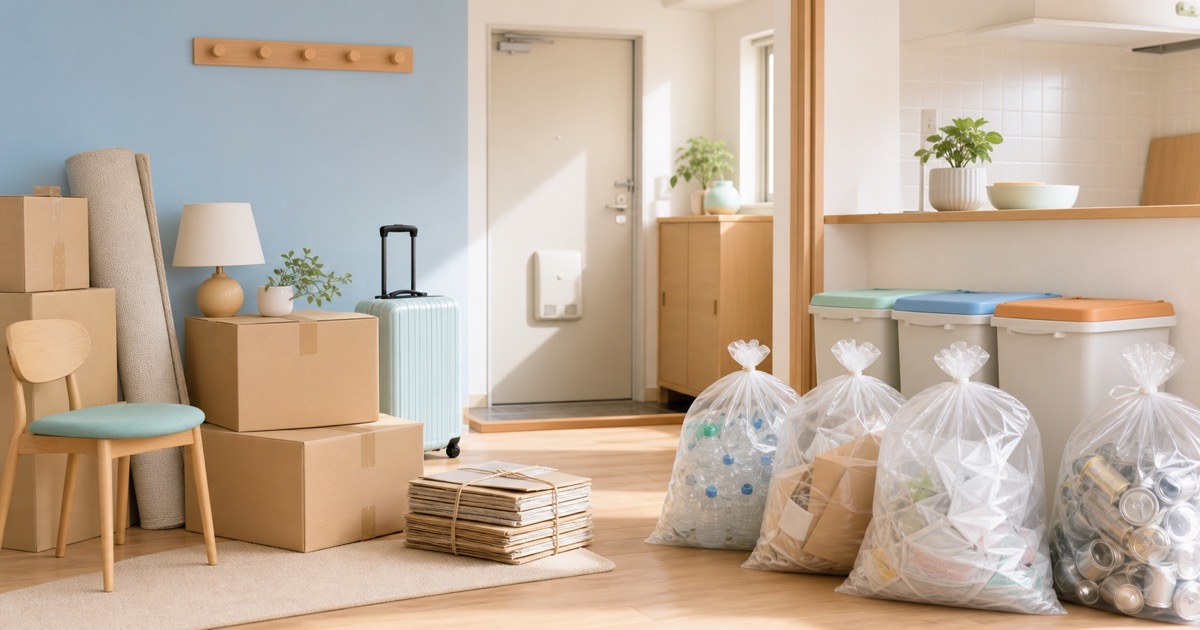
Moving out of a Japanese apartment is a process — and waste disposal is one of the most stressful parts. You've accumulated furniture, appliances, boxes of things you forgot you had, half-used toiletries, and a rice cooker that seemed like a good idea at the time.
Here's the reality: you cannot leave anything behind. Japanese landlords expect the apartment returned in move-in condition. Leaving garbage, furniture, or appliances — even just stacked neatly near the building's waste area — can result in deductions from your security deposit (敷金, shikikin) or additional fees.
This guide gives you a complete, step-by-step checklist for clearing your Japanese apartment before move-out day.
Start 4–6 Weeks Before Your Move-Out Date
Waste disposal in Japan takes time. Large items need to be booked in advance. Sodai gomi pickup can take 2–4 weeks to schedule. Electronics require a specific process. Start early.
Week 6–4: Audit Everything You Own
Walk through every room and categorize your possessions:
| Category | Examples | Disposal Method |
|---|---|---|
| Regular garbage | Food, small packaging, used items | Weekly collection (burnable/non-burnable/recyclable) |
| Oversized waste | Furniture, large shelves, mattresses | Sodai gomi pickup (book in advance) |
| Large appliances | TV, fridge, washing machine, AC | Home Appliance Recycling Law (fee required) |
| Small electronics | Toaster, rice cooker, fan | Small appliance collection box (free) |
| Computer / Phone | Laptop, smartphone | PC recycling / carrier shop (free) |
| Clothing | Bags, jackets, shoes | Donation box or ward clothing collection |
| Books / Paper | Textbooks, magazines, newspapers | Paper recycling (bundled) |
| Canned / Bottled goods | Unopened food, drinks | Offer to neighbors, or regular recyclable |
Step 1: Book Sodai Gomi Pickup Immediately
Sodai gomi (粗大ごみ) — oversized waste — is the biggest bottleneck for most people moving out. Items larger than 30 cm in any direction cannot go in regular garbage bags. Common move-out items that are sodai gomi:
- Bed frame and mattress
- Desk and office chair
- Sofa
- Dining table and chairs
- Bookshelf
- Bicycle
- Suitcase (over 30 cm)
- Floor lamp
- Curtain rod (over 30 cm)
How to Book Sodai Gomi Pickup
1. Find your ward's booking system: Each ward in Tokyo has a separate online booking portal. The address (and the Japanese language) creates a barrier for most foreigners.
2. Book online or by phone: Most wards accept bookings through their website. Enter the items, pick a date, and pay by credit card. Some wards still require a phone call (Japanese only) or konbini payment.
3. Buy the sticker: After booking, you'll receive a sticker number. Buy the sticker (粗大ごみ処理券) at any convenience store, fill in the booking number, and attach it to each item.
4. Put items out at the designated time: The morning of collection, place items at your building's waste area before the specified time (usually before 8:00 AM).
Fastest way: Open GomiSense → — scan any large item and the app shows your ward's sodai gomi booking link, fee, and sticker instructions in English.
Step 2: Handle Large Appliances (Home Appliance Recycling Law)
If you have any of these items, they require a separate disposal process:
- Air conditioner
- Television
- Refrigerator
- Washing machine
These cannot go in sodai gomi. They require you to pay a recycling fee and arrange either:
- Retailer pickup (easiest — call any major electronics store)
- Direct delivery to a recycling facility (cheapest — requires transport)
Budget ¥1,000–¥5,000 per appliance depending on size and transport.
Tip for move-out: If you purchased the appliance from a store with a receipt, that store must accept it back. If the store has closed, any store in the same chain is responsible.
Step 3: Clear Out Regular Garbage Over the Final Weeks
Don't wait until the last week to clear your regular garbage. Japan's waste collection runs on a fixed schedule — you might only have one burnable collection day per week.
How to Clear Out Faster
Burnable garbage (燃えるゴミ): Put out every collection day in the final weeks. Don't stockpile.
Non-burnable garbage (燃えないゴミ): Usually once every 2 weeks. Note the exact day for your ward and don't miss it.
Paper and cardboard (紙類): Bundle newspapers and cardboard with string. Put out on paper recycling day (usually once per month in most wards).
PET bottles: Remove caps and labels. Put out on plastic/recycling day.
Glass bottles and cans: Separate glass from aluminum. Put out on collection day.
Never miss a collection day: Set up GomiSense collection reminders → — the app sends morning notifications before each collection.
Step 4: Donate, Sell, or Give Away Usable Items
Before spending money on disposal, consider:
local furniture resale platforms: Very active for second-hand furniture in Japan. Post items 4–6 weeks before moving — buyers often pick up for free.
local person-to-person resale platforms: Japan's top peer-to-peer platforms for selling household items. Electronics, books, and small items sell quickly.
Local furniture resale platforms: Post furniture or appliances as free pickup several weeks before moving; a nearby recipient may collect them directly.
Donation routes: Some clothing retailers and community organizations accept clean clothing, while some libraries accept books. Confirm current conditions before visiting.
Ask neighbors: Post a note on your building's notice board (in Japanese if possible). Offering furniture to neighbors avoids the hassle for both sides.
Step 5: Handle the Kitchen
The kitchen is usually the most waste-intensive part of a move-out:
Cooking oil: Never pour oil down the drain. Solidify with a commercially available solidifier (固めるテンプル) or absorb with paper towels, then put in burnable garbage.
Canned and jarred food you can't take: Offer to neighbors first. Unopened cans go in recyclable; opened ones drain liquid first.
Cleaning products and chemicals: Leftover spray cans, detergents, and toiletries — gas canisters must be emptied before disposal (non-burnable). Liquid detergents go in burnable (pour out, rinse bottles). Check your ward for hazardous waste rules.
Refrigerator: Defrost completely at least 24–48 hours before the appliance is taken. Clean the interior.
Step 6: Empty the Bathroom
Toiletries with remaining product: Use up as much as possible. Pump bottles — press to empty, then rinse, remove labels, and recycle as non-burnable (depends on material).
Razors and sharp objects: Wrap in paper, tape shut, write "危険" (kiken / dangerous) on the outside, and put in non-burnable.
Aerosol cans (deodorant, shaving cream): Must be completely emptied before disposal. Press to release all remaining gas outdoors. Put in non-burnable (check your ward — some put it in "spray can" category).
Move-Out Day: Final Checklist
On your last day, before handing back the keys:
- All garbage has been put out (on correct collection days)
- Sodai gomi items have been collected
- Large appliances (TV/fridge/washing machine/AC) disposed of correctly
- Refrigerator defrosted and cleaned
- No items left in closets, under beds, or in storage areas
- Balcony cleared of any waste or items
- Mailbox cleared
- GomiSense checked for any remaining items
What Happens If You Leave Items Behind?
Japanese landlords are meticulous about move-out inspections. If you leave items:
- Small items / garbage: Cleaning fee deducted from your deposit. Typically ¥5,000–¥30,000 depending on quantity.
- Furniture or appliances: Significant disposal fees charged — often 2–3x what you'd pay yourself. These get billed as "disposal of abandoned property."
- Large appliances (TV, fridge etc.): Landlord must hire specialized removal — expensive and you'll receive an invoice.
The math is simple: Disposing things yourself costs far less than letting the landlord do it.
How GomiSense Helps During Move-Out
Moving out while managing Japan's waste rules in a second language is genuinely hard. GomiSense was built for exactly this:
- Scan any item and get instant disposal instructions for your ward
- Sodai gomi booking link for your exact ward
- Nearest recycling and donation points shown on the map
- Collection day calendar so you don't miss your last chance to put out garbage
- 5-language support — English, Japanese, Turkish, Korean, Chinese
Download GomiSense Free → — Start your move-out audit today.
Frequently Asked Questions
Can I leave furniture on the street in Japan? No. Leaving items on the street without proper disposal is illegal and can result in fines. Items must go through sodai gomi booking or proper disposal channels.
How long does sodai gomi pickup take to schedule? Usually 1–3 weeks, but sometimes longer during busy periods (March–April is peak moving season in Japan). Book as early as possible.
What if I'm leaving Japan and don't have time to sort everything? Contact a professional "trash removal" (不用品回収) service. They handle everything — sodai gomi, appliances, everything — for a fee. It's not cheap (¥10,000–¥50,000+) but saves time. GomiSense can show you nearby services.
Can my real estate agent help with waste disposal? Some will assist with booking information, but disposal is generally the tenant's responsibility.
What is shikikin and how does waste affect it? Shikikin (敷金) is the security deposit — usually 1–2 months' rent. Improper waste disposal is one of the most common reasons for deductions. Handling it yourself protects your deposit.
Moving out of a Japanese apartment takes planning — but with a checklist and the right tools, it's completely manageable. Start your sodai gomi booking first, and use GomiSense to handle everything else. Get started →
Related Guides
Back to BlogWhere to Donate or Recycle Electronics in Japan (2026)
Find the correct route for old phones, PCs, TVs, batteries, and small appliances in Japan, including trade-in, reuse, retailer, and ward collection options.
Read article →How to Sort Garbage in Japan: The Complete Step-by-Step Guide for Foreigners
Confused about Japan's garbage sorting rules? This guide covers every category — burnable, non-burnable, recyclables, PET bottles, and large items — with practical tips for foreigners living in Japan.
Read article →Japan Garbage Collection Days: Find Your Ward Schedule
Find burnable, recyclable, non-burnable, and bulky-waste collection days in Japan using official ward schedules, address tables, and reminder tools.
Read article →