Where to Donate or Recycle Electronics in Japan (2026)
Find the correct route for old phones, PCs, TVs, batteries, and small appliances in Japan, including trade-in, reuse, retailer, and ward collection options.
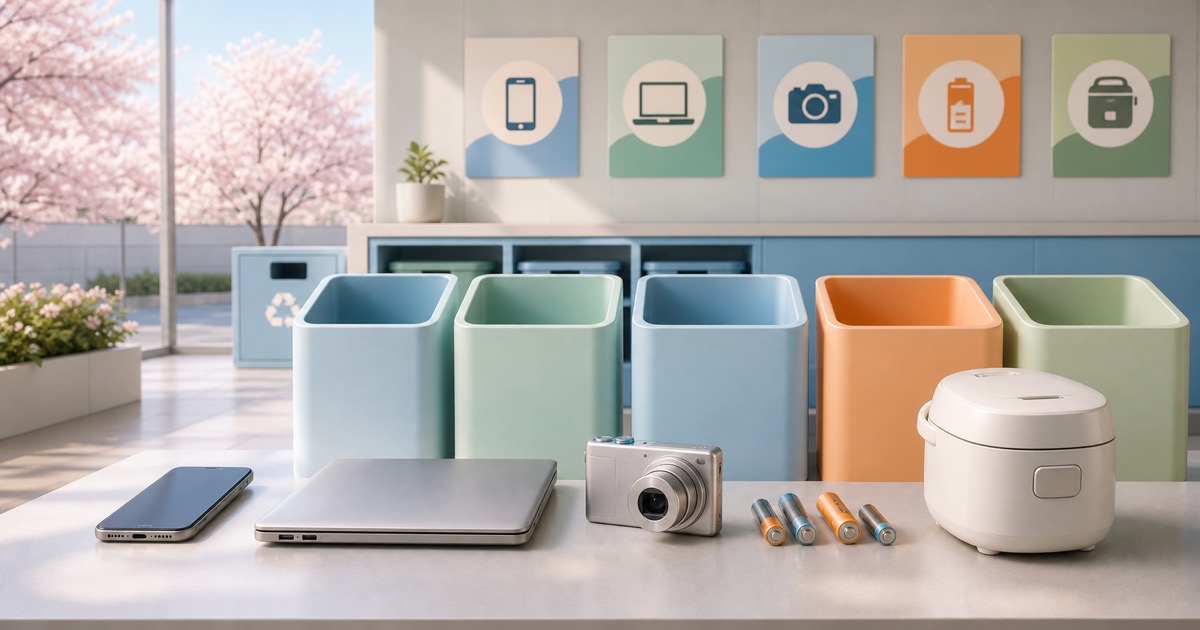
Wondering where to donate electronics in Japan — or where to recycle old electronics you no longer need? Japan has one of the world's most structured e-waste systems, but it's split across multiple programs depending on what you have.
You cannot put a television in the burnable garbage. You cannot take a laptop to sodai gomi pickup. You cannot throw a smartphone in any regular bag. Each device category follows a different law, a different drop-off point, and in some cases a different fee structure.
This guide tells you exactly where to go — whether you want to donate, recycle, or dispose — for every major electronics category.
Where to Donate Electronics in Japan
If your device still works, donation is often faster and free:
| Item | Where to Donate | Cost |
|---|---|---|
| Smartphones / feature phones | Any carrier shop (participating mobile carrier shops) | Free |
| Laptops (functional) | local reuse shop, specialized reuse shop, secondhand electronics shops | Free (or cash back) |
| Small appliances | Ward collection boxes, Goodwill-style thrift shops | Free |
| Game consoles / cameras | local reuse shop, secondhand shops | Free (or cash back) |
Not sure if your item qualifies for donation? Open GomiSense → — scan the item to get disposal options for your ward, including nearest donation and recycling points.
Where to Recycle Old Electronics in Japan (Free Options)
Some users search for where to recycle old electronics — the answer depends on the device:
- Phones: any carrier shop, free regardless of brand or condition
- Laptops with a PCリサイクルマーク: free mail-back via manufacturer
- Batteries (dry cell): free at most supermarkets and home centers
- Small appliances: free ward collection boxes at the ward office
- TVs, fridges, ACs, washing machines: paid recycling via retailers (¥990–¥4,730)
Why Japan Has Special Rules for Electronics
Two national laws govern electronic waste in Japan:
1. The Home Appliance Recycling Law (家電リサイクル法 — Kaden Recycle Hou) Enacted in 2001, this law covers four specific categories of large appliances and requires manufacturers and retailers to fund their recycling. You pay a recycling fee.
2. The Small Appliance Recycling Law (小型家電リサイクル法) Enacted in 2013, this law covers smaller electronics. Unlike the Home Appliance Recycling Law, it relies on municipal collection boxes and is free to use.
These two laws mean different rules apply depending on what you're trying to get rid of.
The Big 4: Home Appliance Recycling Law Items
The Home Appliance Recycling Law (家電リサイクル法) covers four categories that cannot go into any regular garbage stream:
| Item | Examples | Recycling Fee (approx.) |
|---|---|---|
| Air conditioners | All types | ¥990–¥2,530 |
| Televisions | CRT, LCD, plasma | ¥1,320–¥2,970 |
| Refrigerators / Freezers | All sizes | ¥3,740–¥4,730 |
| Washing machines / Dryers | All types | ¥2,530–¥2,970 |
How to Dispose of These Items
Option A: Through the retailer where you bought it When you buy a new appliance, the retailer is legally required to take back the old one. Bring your old TV when you pick up the new one, or arrange a simultaneous pickup. The recycling fee is added to your purchase.
Option B: Through a local retailer A participating electronics retailer can accept these four appliances for recycling. You pay the recycling fee at the counter, plus a transport fee if home collection is requested.
Option C: Direct delivery to a recycling plant You can ship the appliance directly to a designated recycling facility. Buy a "recycling ticket" (家電リサイクル券) at Japan Post, fill in your information, attach it to the appliance, and arrange transport yourself. This is the cheapest option if you can handle logistics.
Option D: Ward-specific routes Some wards have their own partnerships with recycling facilities. Check your ward office website or use GomiSense to find the option for your specific address.
Not sure which option works for your address? Open GomiSense → — scan the item or search by name to get your ward's recommended route instantly.
PCs and Laptops: The PC Recycle Program
Computers and laptops are not covered by the Home Appliance Recycling Law. They have their own system: the PC 3R (Reduce / Reuse / Recycle) Program, run by the PC3R Promotion Center.
Recycling a PC in Japan (Step by Step)
If the PC has a recycling mark (PCリサイクルマーク): Look for a green and blue recycling mark on the device or its manual. If it's there, recycling is free. Contact the manufacturer directly — most offer a mail-back program.
If the PC does not have a recycling mark: You pay a fee. Apply through the device manufacturer's official recycling page, purchase the required return label, and mail the device according to its instructions.
For foreign brands or uncertified devices: Some wards and retailers accept these at small appliance collection points. Check with GomiSense for locations near you.
What Counts as "PC" Under This Law?
- Desktop PCs, laptops, tablets (with some exceptions)
- Monitors (CRT and LCD)
- Note: Printers are NOT included — they're handled separately as small appliances
Smartphones and Feature Phones
Smartphones and old keitai (feature phones) can be recycled through the Mobile Phone Recycling Program run by the Japan Recycling Promotion Center.
Where to Recycle Your Phone in Japan
1. Carrier shops (participating mobile carrier shops) Any carrier store in Japan will accept old phones and smartphones — regardless of which carrier they're from or whether the phone is broken. Leave it at the counter. Free.
2. Mobile phone retail stores Participating electronics retailers often have a dedicated phone drop-off bin.
3. Ward collection boxes Many wards have small collection boxes for phones, tablets, and accessories at the ward office entrance.
Important: Before recycling, factory-reset your phone and remove the SIM card. Most shops will remind you.
Batteries: Two Types, Two Systems
Batteries in Japan split into two categories with completely different disposal rules:
Dry Cell Batteries (乾電池 — Kandan Chi)
Standard AA, AAA, C, D, 9V batteries.
- Collection point: Many supermarkets, home-improvement stores, and some convenience stores have designated collection boxes
- Cost: Free
- Do not: Put them in burnable or non-burnable garbage — mercury and cadmium contaminate the waste stream
Rechargeable Batteries / Lithium-Ion Batteries (充電式電池 / リチウムイオン電池)
Found in phones, laptops, power banks, cameras, and small devices.
- Collection point: Electronics retailers, camera shops, and some home centers have dedicated lithium battery collection boxes (marked with the rechargeable battery symbol)
- Cost: Free
- Warning: Never puncture, crush, or put damaged lithium batteries in regular garbage — fire risk
Find your nearest battery collection point: Open GomiSense Map →
Small Appliances: The Free Municipal Collection System
Small electronics not covered by the Big 4 law fall under the Small Appliance Recycling Law. Examples:
- Toasters, rice cookers, blenders
- Electric fans, humidifiers, air purifiers
- Digital cameras, game consoles
- Electric shavers, hair dryers
- Cables, chargers, accessories
How to Recycle Small Appliances
Ward collection boxes: Most wards have dedicated collection boxes at the ward office, city hall, and sometimes libraries or community centers. Check the box size limit (usually 30cm × 15cm) — devices that fit in the slot go in for free.
Retailer drop-off: Major electronics chains accept small appliances. Some require purchase of a new item; others accept drop-offs regardless.
Sodai gomi (large items): If a small appliance is too large for the collection box (e.g., a large printer or dehumidifier), it may qualify for sodai gomi pickup through your ward — not free, but straightforward.
Quick Reference: Which System for Each Item?
| Item | System | Cost |
|---|---|---|
| TV (all types) | Home Appliance Recycling Law | ¥1,320–¥2,970 |
| Air conditioner | Home Appliance Recycling Law | ¥990–¥2,530 |
| Refrigerator | Home Appliance Recycling Law | ¥3,740–¥4,730 |
| Washing machine | Home Appliance Recycling Law | ¥2,530–¥2,970 |
| PC / Laptop | PC 3R Program | Free (with mark) / ¥3,000–¥5,000 |
| Smartphone | Mobile recycling / Carrier shop | Free |
| Dry batteries | Municipal collection box | Free |
| Lithium batteries | Electronics shop collection | Free |
| Toaster, fan, etc. | Small Appliance Law / Ward box | Free |
| Printer | Small Appliance Law | Free |
How GomiSense Makes This Easier
Remembering which law covers which item is genuinely difficult. GomiSense eliminates the research:
- Open the app and scan the device with your camera
- The AI identifies the item and tells you exactly which system applies
- The map shows you the nearest recycling point for that specific item category
- If sodai gomi booking is needed, the app guides you through your ward's booking process
Frequently Asked Questions
Can I just leave electronics outside for sodai gomi pickup? No. The Big 4 appliances (TV, AC, fridge, washing machine) are explicitly excluded from sodai gomi. Leaving them outside without proper disposal is illegal and can result in fines.
What do I do with a broken TV? Same as a working TV — it still goes through the Home Appliance Recycling Law. Broken appliances are still accepted by retailers and recycling facilities.
Can I recycle electronics in Japan if I'm not a resident? Yes. Most systems don't require residence registration. Carrier shops accept phones from anyone.
What happens to the electronics after recycling? Japan's recycling industry extracts metals (gold, silver, copper, rare earth metals) from electronics for reuse. Japan has been recognized internationally for the quality of its e-waste processing.
My item isn't on any list. What do I do? Scan it with GomiSense → — the AI will categorize it and find the right disposal method for your ward.
Japan's electronics recycling system is complex, but it's also one of the most effective in the world. Understanding which system applies to your item is the key — and once you know, disposal is usually free or very low cost. When in doubt, scan it first.
Related Guides
Back to BlogJapan Apartment Move-Out Trash Guide: What to Do With Your Garbage Before You Leave
Moving out of a Japan apartment? This checklist covers everything: how to dispose of furniture, appliances, food waste, and oversized items before you hand back the keys. Avoid deposit penalties and neighborhood complaints.
Read article →How to Sort Garbage in Japan: The Complete Step-by-Step Guide for Foreigners
Confused about Japan's garbage sorting rules? This guide covers every category — burnable, non-burnable, recyclables, PET bottles, and large items — with practical tips for foreigners living in Japan.
Read article →Japan Garbage Collection Days: Find Your Ward Schedule
Find burnable, recyclable, non-burnable, and bulky-waste collection days in Japan using official ward schedules, address tables, and reminder tools.
Read article →