Japan PET Bottle Recycling: What the Labels Mean & Where to Drop Them
Everything you need to know about recycling PET bottles in Japan — how to identify PET bottles, the 4-step preparation (rinse, remove cap, remove label, crush), where to find drop-off points, and how rules vary by region.
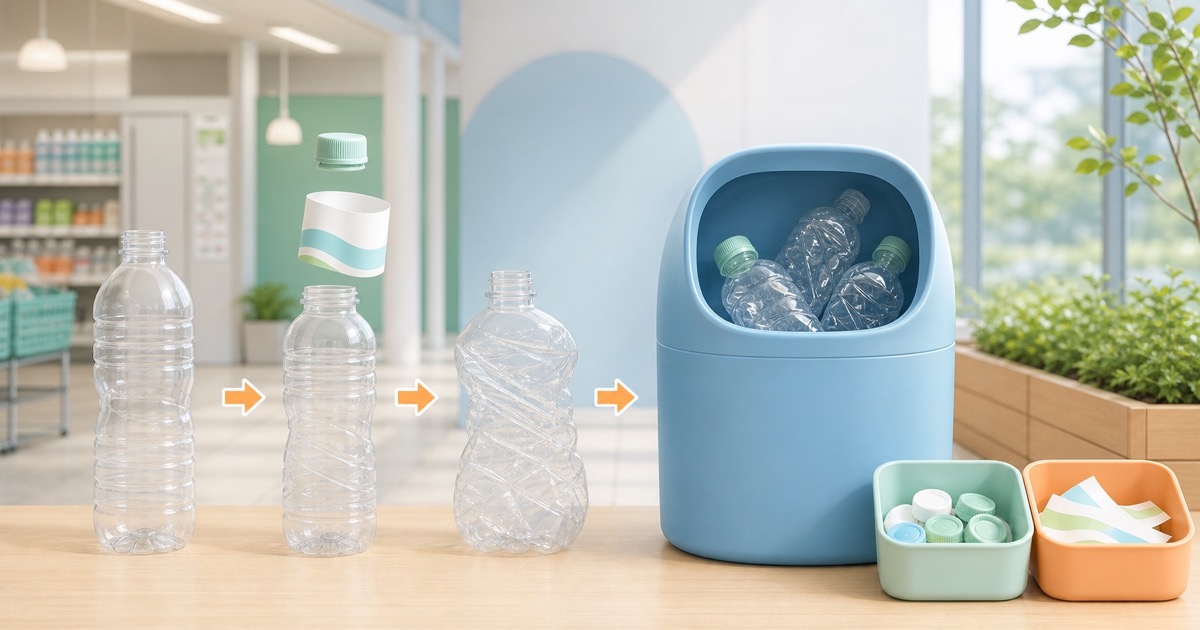
Japan collects and recycles PET bottles at one of the highest rates in the world — over 85% of PET bottles are recycled annually. But this impressive rate only works because residents sort and prepare bottles correctly. For foreigners, the rules can seem confusing at first: why do you have to remove the cap? Where does the label go? Can I put a mayonnaise bottle with the PET bottles?
This guide covers everything about PET bottle recycling in Japan — from identifying what counts as a PET bottle to where you can actually drop them off.
What Is a PET Bottle? How to Identify One
Not every plastic bottle is a PET bottle. In Japan, PET refers specifically to bottles made of polyethylene terephthalate — a specific type of clear, lightweight plastic used for beverages and some food products.
Look for the PET symbol on the label or bottle body:
The most reliable indicator is the PET recycling symbol — a triangle made of arrows with "PET" or "1" inside, often printed on the bottom of the bottle or embedded in the label. In Japan, this is standardized and required on all PET containers.
Common PET bottles:
- Water bottles
- Tea and coffee drinks
- Sports and energy drinks
- Carbonated soft drinks
- Juice bottles
- Soy sauce, ponzu, and other condiment bottles
- Some cooking oil bottles
Not PET bottles (even though they're plastic):
- Mayonnaise tubes (squeeze-type, soft plastic)
- Yogurt containers
- Plastic cups and tubs
- Shampoo and cosmetic bottles (these are usually HDPE or other plastics)
- Milk cartons (these are paper/cardboard)
When in doubt, look for the PET triangle symbol. If it's not there, it's not a PET bottle.
The 4-Step PET Bottle Preparation
This is the part that surprises most foreigners. In Japan, you cannot simply rinse a PET bottle and toss it in the recycling bin. There are four required preparation steps:
Step 1: Remove the Cap (キャップを外す)
The cap is a different type of plastic — usually polypropylene (PP) — and cannot be recycled in the same stream as the PET bottle. Remove the cap and discard it separately:
- In many wards, caps go into the plastic containers/packaging (プラ) category
- Some convenience stores have dedicated cap collection boxes (often to donate proceeds to charity)
- Check your ward's specific rules for cap disposal
Step 2: Remove the Label (ラベルをはがす)
Labels are made of a different plastic film (often polystyrene or PVC) that interferes with PET recycling. Peel off the entire label.
Tip: Most labels in Japan have a perforated tear-off line to make this easier. Look for a small arrow or dotted line on the label — pull there and the label peels off cleanly.
The removed label goes into:
- Plastic containers/packaging (プラ) in most wards
- Or burnable garbage if your ward doesn't accept label plastic
Step 3: Rinse the Inside (すすぐ)
Even a small amount of juice, soda, or tea residue inside the bottle will ferment, create odors at the collection point, and contaminate the recycling batch. Give the bottle a quick rinse with water until the inside is clean.
You don't need to use soap — water is fine. Just fill it halfway, shake, and pour out.
Step 4: Crush the Bottle (つぶす)
Once rinsed, crush the bottle flat to reduce volume. This makes storage at home easier and reduces space in collection containers.
To prevent the bottle from re-expanding, replace the cap after crushing — or leave the bottle open, depending on your preference. (Note: you're only replacing the cap to keep it flat — don't submit it with the cap still on if your ward separates caps.)
Where to Drop Off PET Bottles in Japan
PET bottles are collected in several ways depending on your location and building type.
1. Neighborhood Garbage Station (ゴミステーション)
The most common method for residents. On your designated PET bottle collection day, bring your prepared bottles in the specified bag (if required) to your building's or neighborhood's garbage station.
Collection frequency: typically once per week on a fixed day.
2. Convenience Store Recycling Machines
Many convenience stores in Japan have reverse vending machines for PET bottles just inside the entrance or near the register. These are increasingly common at major chains (participating convenience stores).
You insert clean, cap-off PET bottles and receive:
- Points added to your convenience store loyalty card
- Sometimes small rewards or discounts
These machines are available 24/7 and accept bottles without requiring specific collection days — very convenient for tourists or those with irregular schedules.
3. Supermarket Collection Bins
Most major supermarkets in Japan have PET bottle collection bins near the entrance or in the store. These typically accept pre-prepared bottles (cap removed, label removed, rinsed).
Many supermarket chains award loyalty points per bottle — sometimes a significant bonus.
4. Train Station Recycling Bins
Many train stations in Japan provide separate bins for PET bottles — usually alongside cans and cartons. These are particularly useful if you're carrying a bottle and want to dispose of it responsibly before getting on the train.
What Happens to Recycled PET Bottles in Japan?
Japan's PET recycling infrastructure is among the world's most advanced. Collected PET bottles are:
- Sorted and compressed into bales at processing facilities
- Shredded into flakes, then washed and melted
- Transformed into new products:
- New PET bottles (bottle-to-bottle recycling)
- Polyester fibers for clothing and stuffing
- Food trays and containers
- Construction materials
Some clothing manufacturers use recycled Japanese PET bottles in textile products. Some beverage companies label bottles with the percentage of recycled PET content.
PET Bottle Recycling Rules Vary by Region
While the basics are the same nationwide, specific rules differ by municipality:
Tokyo: PET bottles collected separately from cans and glass. Caps are plastic containers (プラ). Collection once per week on a fixed day.
Osaka: Similar system, but some wards collect PET, cans, and bottles together on the same day.
Kyoto: Stricter sorting in some neighborhoods. Some areas require bottles to be placed in see-through bags.
Rural areas: May have designated drop-off stations at supermarkets or community centers rather than curbside collection.
Tip: Always check your specific ward's rules — they override any general guidelines.
Common Mistakes with PET Bottle Recycling
❌ Throwing in a bottle with liquid still inside Even a few milliliters of old tea will smell terrible by the time it reaches the recycling facility. Always rinse.
❌ Leaving the label on A label-on bottle at a recycling facility must be removed manually or discarded entirely. It defeats the purpose. Always peel.
❌ Putting caps in the PET bottle bin Caps are not PET. They go to plastic containers or dedicated cap collection boxes.
❌ Recycling non-PET bottles as PET Mayonnaise squeeze containers, shampoo bottles, and yogurt tubs are NOT PET. Always check for the PET symbol.
❌ Putting out bottles the night before collection Same rule as all garbage in Japan — crows will tear open nets or knock over bottles. Morning only.
The Bottom Line on PET Bottle Recycling
Japan's PET bottle recycling system is detailed but completely logical once you know the steps:
- Identify — Look for the PET symbol
- Remove the cap — Separate disposal
- Remove the label — Separate disposal
- Rinse — Quick wash
- Crush — Save space
- Drop off — Garbage station, convenience store, or supermarket
Once you're in the habit, the whole process takes about 15 seconds per bottle. And with Japan's 85%+ recycling rate, every bottle you properly sort genuinely makes a difference.
The GomiSense app can help you remember which day PET bottles are collected in your specific neighborhood, and will remind you each morning so you never miss a collection.
Related Guides
Back to BlogJapan Apartment Move-Out Trash Guide: What to Do With Your Garbage Before You Leave
Moving out of a Japan apartment? This checklist covers everything: how to dispose of furniture, appliances, food waste, and oversized items before you hand back the keys. Avoid deposit penalties and neighborhood complaints.
Read article →Where to Donate or Recycle Electronics in Japan (2026)
Find the correct route for old phones, PCs, TVs, batteries, and small appliances in Japan, including trade-in, reuse, retailer, and ward collection options.
Read article →How to Sort Garbage in Japan: The Complete Step-by-Step Guide for Foreigners
Confused about Japan's garbage sorting rules? This guide covers every category — burnable, non-burnable, recyclables, PET bottles, and large items — with practical tips for foreigners living in Japan.
Read article →