Moving to Japan? Here's Everything You Need to Know About Garbage
Just moved to Japan and confused about garbage rules? This guide covers your first week checklist, how to get your local sorting schedule, what bags to buy, and common mistakes new residents make.
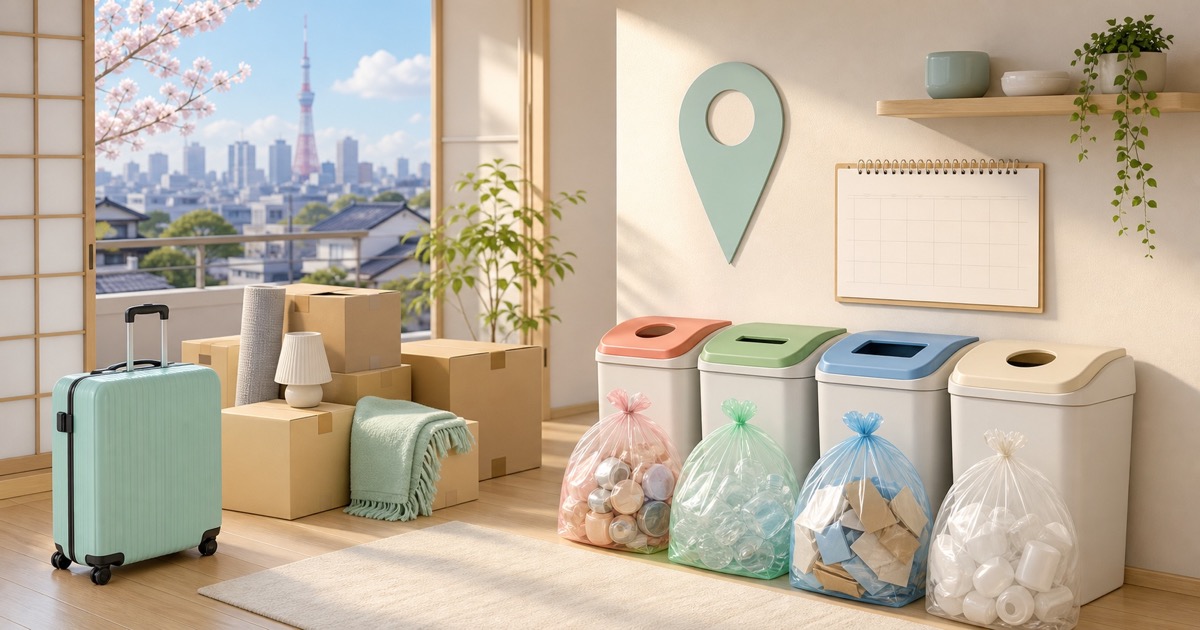
You've made it to Japan. The apartment is yours, the boxes are half-unpacked, and you're staring at a stack of garbage from moving day. Then you realize: you have no idea what goes where, when it gets collected, or what bags you're supposed to use.
Don't worry. Every foreigner who has moved to Japan has been exactly here. This guide walks you through everything you need to know about garbage in Japan — not just the rules, but the practical first steps for your first week.
Why Japan's Garbage System Feels Overwhelming at First
Japan's waste system is genuinely complex by international standards. Most countries have 1–2 garbage streams. Japan has 5–8 depending on your city, with different collection days for each, designated bags required by your ward, and unwritten community rules that locals follow instinctively.
The good news: once you understand the system, it takes about 10 extra seconds per item to sort correctly. And once you have the schedule down, it becomes automatic.
Step 1: Find Out Your Ward's Garbage Rules Immediately
Every city and ward in Japan has its own rules. Your ward's rules are what matter — not national guidelines.
The fastest ways to get your rules:
-
Ask your landlord or real estate agent. Many will provide a garbage schedule sheet (収集カレンダー) along with your keys. If they don't, ask for one — they almost always have it.
-
Check your building's entrance area. Most apartment buildings in Japan post the garbage schedule near the mailboxes or entrance. Look for a printed sheet with days of the week.
-
Visit the ward office (区役所). Within your first week, visit the local ward office to register your address (住民票). While you're there, ask for the garbage sorting guide for your address. They'll hand you a printed sheet.
-
Use GomiSense. Enter your address in the app and it pulls up your specific collection schedule with daily reminders.
Step 2: Buy the Right Garbage Bags
This surprises many new residents: you cannot use just any garbage bag in Japan. Most wards require you to use designated bags sold at convenience stores (コンビニ), supermarkets (スーパー), and drug stores (ドラッグストア).
What to buy in your first week:
- Burnable garbage bags (可燃ごみ用) — the most used; get a pack of medium and large sizes
- Non-burnable garbage bags (不燃ごみ用) — less frequent, but you'll need them
- Check if your ward also requires designated bags for PET bottles, cans, etc. (some do, some don't)
How to find the right bags:
At the register area of convenience stores and near the entrance of supermarkets, look for bags labeled with your city or ward name. In Tokyo, you'll find bags for each specific ward (Shinjuku, Shibuya, Nerima, etc.).
Tip: The bags are usually color-coded by category and semi-transparent so collectors can see the contents.
Step 3: Learn Your Collection Days
Collection days vary by address, not just by ward. Your building might be on a different schedule than the building across the street.
Typical collection pattern for Tokyo:
| Category | Typical Frequency |
|---|---|
| Burnable garbage | 2–3 times per week |
| Non-burnable garbage | 1–2 times per month |
| PET bottles | Once per week |
| Cans | Once per week |
| Glass bottles | Once per week or bimonthly |
| Paper/Cardboard | 1–2 times per month |
| Large items | By appointment |
Once you have your schedule, set recurring phone reminders for each type. Or use GomiSense — it sends morning notifications on each collection day.
Step 4: Find Your Garbage Collection Point (ゴミステーション)
In Japan, garbage is not put out in front of your individual apartment door. You must bring it to a designated collection point — called a ゴミステーション (gomi station).
Every apartment building and neighborhood has one. It's usually:
- A wire mesh enclosure near the building entrance
- A covered area designated for the building
- A marked spot on the street for the neighborhood
In your first week: Ask your landlord, building manager, or neighbor where the garbage station is. Find it before you have garbage to dispose of.
Rules at the station:
- Only put garbage there on collection day morning (not the night before)
- Use the correct bags
- Close the lid or net after you leave to prevent birds from getting in
Step 5: Understand the 6 Main Garbage Categories
Here's a quick overview of what goes where:
Burnable (可燃): Food scraps, tissues, paper towels, dirty/greasy packaging, small pieces of wood, diapers, leather.
Non-burnable (不燃): Ceramics, mirrors, glass that isn't bottles, small metal items, spray cans (empty), broken umbrellas, small electronics.
PET bottles (PETボトル): Rinsed, cap removed, label removed, crushed. Drinks, sauces, water bottles with the PET symbol.
Cans (缶): Rinsed aluminum and steel drink/food cans.
Glass bottles (ビン): Rinsed glass bottles. Not broken glass.
Plastic packaging (プラ): Clean plastic bags, trays, wrappers. Must be rinsed.
Paper (紙類): Bundled newspapers, magazines, cardboard. Must be clean and dry.
When in doubt: if it's dirty organic waste, burnable. If it's large, call the ward. If it's clean plastic, plastic containers.
The Unwritten Rules New Residents Often Break
These will not be in any official guide, but breaking them will get you a yellow sticker on your bag — or an unhappy neighbor:
❌ Leaving garbage the night before collection Crows (and sometimes cats) will tear open bags and scatter garbage across the street. Neighbors take this very seriously. Only put garbage out on collection day morning.
❌ Using unlabeled black bags Black garbage bags hide contents. Many wards explicitly prohibit them. Use the official semi-transparent designated bags.
❌ Putting garbage in the wrong bin because you're not sure When uncertain, it's better to hold the item and look it up than to dump it in the wrong category. A single wrong item can get your whole bag rejected.
❌ Forgetting to rinse recyclables Cans, PET bottles, and glass bottles must be clean before recycling. Food residue in recyclables contaminates the whole batch.
❌ Ignoring collection day changes during holidays During New Year's (late December–early January), garbage collection stops for about a week. Watch for notices in your building and plan accordingly.
Large Item Garbage: Your First Big Test
One of the most common challenges for new residents: what to do with moving boxes, old furniture from the previous tenant, or items left in your apartment.
For cardboard boxes from moving:
- Break them down flat
- Bundle with string
- Put out on paper/cardboard collection day
For large furniture, appliances, or other bulky items:
- Contact your ward's large-item waste service (粗大ごみ収集受付)
- Book a collection date online or by phone
- Buy a processing ticket (粗大ごみ処理券) at a convenience store
- Attach and place at the collection point on the appointed date
Cost: Varies by item, typically ¥200–¥2,000+.
Your Moving-In Garbage Checklist
Print or save this for your first week:
- Get garbage schedule from landlord, building notice board, or ward office
- Find your building's garbage collection point (ゴミステーション)
- Buy designated burnable and non-burnable garbage bags
- Set up recurring calendar reminders for each collection day
- Download GomiSense for daily reminders and category lookups
- Break down moving boxes and schedule paper collection day
- Check if old items need large-item disposal and book if needed
- Learn the crows rule: no garbage the night before
Common Questions from New Residents
Q: What happens if I put garbage in the wrong category? A: Collectors will leave it with a rejection sticker. It will sit there until you sort it correctly and put it out on the right day.
Q: Can I use garbage bags from my home country? A: No. You must use the designated bags sold in your ward.
Q: My apartment has a garbage room — is that different? A: Some larger buildings have an indoor garbage room. Rules vary, but the same categories and bag requirements apply. Check with your building management.
Q: What if I have a lot of garbage from moving? A: Spread it over multiple collection days. Don't overfill or stack bags outside the station — it creates problems for neighbors and collectors.
Q: Is there English support at the ward office? A: Many ward offices in major cities have multilingual staff or translation resources. You can also show them this page or use the GomiSense app for translation help.
Your First Month: What to Expect
Week 1: Everything feels confusing. Focus on basics — get your schedule, get the right bags, find your collection point.
Week 2–3: You'll start recognizing collection day patterns and it becomes routine.
Month 1: Sorting becomes second nature. You'll know instinctively which bin a PET bottle goes in, when to put out cans, and why that yogurt container isn't a PET bottle.
Japan's garbage system rewards consistency. Once you're in the rhythm, it takes almost no extra effort — and you'll genuinely feel good about contributing to one of the world's cleanest recycling systems.
Related Guides
Back to BlogJapan Apartment Move-Out Trash Guide: What to Do With Your Garbage Before You Leave
Moving out of a Japan apartment? This checklist covers everything: how to dispose of furniture, appliances, food waste, and oversized items before you hand back the keys. Avoid deposit penalties and neighborhood complaints.
Read article →Where to Donate or Recycle Electronics in Japan (2026)
Find the correct route for old phones, PCs, TVs, batteries, and small appliances in Japan, including trade-in, reuse, retailer, and ward collection options.
Read article →How to Sort Garbage in Japan: The Complete Step-by-Step Guide for Foreigners
Confused about Japan's garbage sorting rules? This guide covers every category — burnable, non-burnable, recyclables, PET bottles, and large items — with practical tips for foreigners living in Japan.
Read article →