Why Japan Has So Few Trash Cans—and Where to Find Bins
Learn why public bins can be hard to find in Japan and what tourists should do with drink containers, food packaging, hotel waste, and batteries.
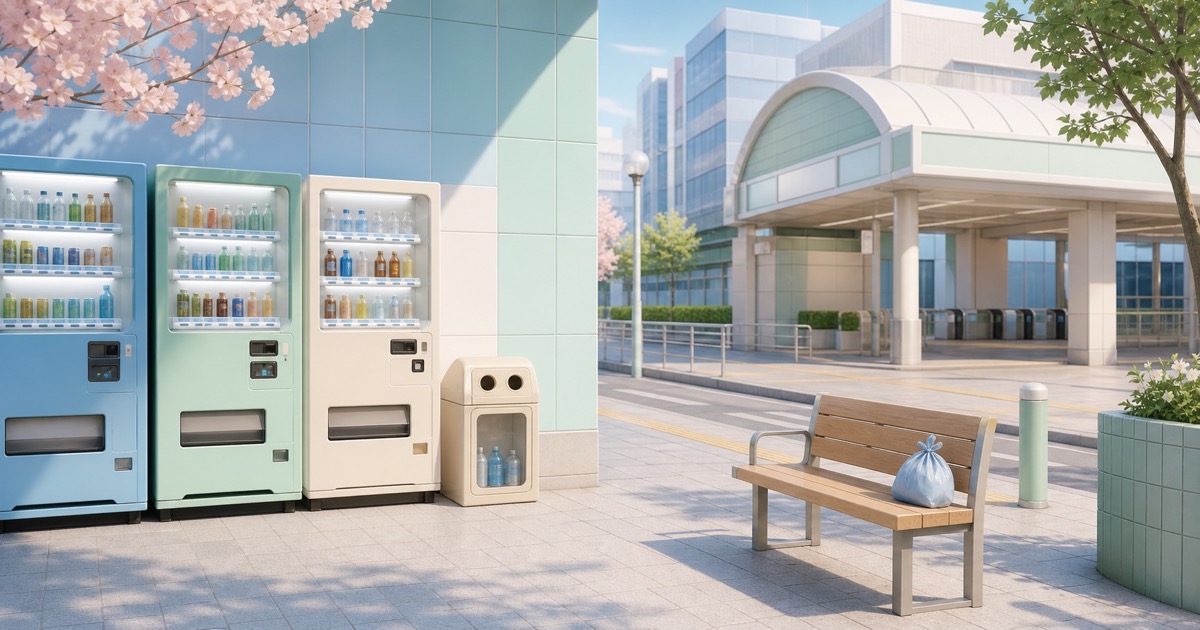
You arrive in Tokyo, finish your vending machine coffee, and look around for a bin. Nothing. You walk two blocks. Still nothing. You end up carrying that empty can for the next twenty minutes before finally spotting a recycling slot outside a convenience store.
Welcome to Japan — where public trash cans are almost nonexistent, even in one of the world's most densely populated and meticulously clean cities.
How does this work? Why does Japan have no public garbage bins? And most importantly, what are you supposed to do with your trash? This guide answers everything.
The Short Answer: There Is No Single Nationwide Reason
Security concerns after the 1995 Tokyo subway attack are often cited, and some transport operators did remove or redesign bins. But that event does not explain every missing bin in every city. Public-bin availability is decided by municipalities, rail operators, venues, and private businesses. Operating cost, contamination, separation rules, and local etiquette also matter.
After the 2005 Aichi World Expo, more bins were temporarily added, and the policy has softened slightly over the decades. But Japan never fully reversed the removal. Today, public trash cans remain extremely rare in cities like Tokyo, Osaka, and Kyoto.
The Deeper Cultural Reason: You're Responsible for Your Own Waste
The practical expectation is simple: you remain responsible for your waste until you find an appropriate, clearly labeled disposal point.
Do not leave a bag beside a full bin, use a residential collection point, or push mixed waste into a recycling opening. Carrying a small sealable bag is the most reliable fallback.
Rules still vary by location. A station may have bins inside a paid area, a venue may limit bins to event customers, and a store may accept only waste from products consumed there.
The result: despite having almost no public bins, Japanese cities are among the cleanest in the world. The system works not because of infrastructure, but because of deeply ingrained personal responsibility.
Where You Actually Can Throw Trash in Japan
While public bins are rare, they do exist in specific locations:
1. Convenience Stores (コンビニ)
This is where most people in Japan throw away their on-the-go trash. Convenience stores have sorting bins — usually separated into burnable waste, PET bottles (without caps), and cans — right at the entrance or next to the register.
Unwritten rule: These bins are meant for products purchased at that store. Using them for your personal trash (especially garbage from home) is frowned upon.
2. Train Stations
Major train stations, high-speed rail stations, and airport terminals often have trash and recycling bins on platforms or in waiting areas. Follow the category labels at each location.
3. Vending Machines
Some vending-machine banks have a container return box nearby. Use it only for the drink-container types shown on the label; it is not a general trash can.
4. Fast Food Restaurants & Cafes
If you buy food at a restaurant, coffee shop, or fast-food chain in Japan, there are bins inside the restaurant. You're expected to separate your waste and dispose of it there before leaving.
5. Major Tourist Sites & Parks
Theme parks (Disneyland, USJ), some larger parks, and major tourist attractions often have bins available. These tend to be clustered near food stalls.
6. Your Hotel Room
Hotels in Japan will have small waste bins in the room. For longer stays, your hotel can usually advise on how to dispose of larger amounts of waste.
What Japanese People Actually Do
The most common approach to on-the-go waste management in Japan:
- Carry a small bag — Many Japanese people (especially women) carry a small plastic bag in their purse or bag specifically for trash accumulated during the day
- Check customer-bin labels — If a shop provides a bin, use it only for accepted customer waste and follow its policy
- Take it home — Food packaging, shopping bags, and wrappers go back into your bag and are thrown away at home in the correct sorted bin
This behavior is so normalized that nobody finds it odd. You won't see people visibly annoyed at carrying waste. It's just part of daily life.
Tips for Tourists Visiting Japan
If you're visiting Japan and not used to carrying your trash, here are practical strategies:
Buy a small zip-lock bag at a 100-yen shop — Keep it in your daypack as a portable trash holder. Empty it at your hotel each evening.
Check before you rely on a store bin — Many shops have moved bins indoors or removed them. If one is available, follow the labels and customer-use policy.
Look for vending machine bins — In areas without convenience stores, vending machine clusters often have recycling slots nearby.
Respect restaurant bins — Use them for food purchased in that restaurant only. Don't use another restaurant's bin to offload last night's hotel leftovers.
Follow train and station labels — Bin availability and accepted categories vary by operator, train, and station. Never leave waste on a seat or platform.
Why Japanese Cities Stay So Clean Without Bins
This is the question that surprises most visitors. The answer lies in a combination of:
- Cultural conditioning — Personal responsibility for waste is taught from childhood
- Community pressure — Social norms are strong; littering is deeply stigmatized
- Private facilities make their own rules — Shops and venues may provide customer bins, but they are not a public disposal network
- Regular street cleaning — Municipal workers do sweep streets regularly, especially in urban centers
The result is a system where visitors need to pay more attention to labels and keep a carry bag ready. It is not one uniform national design, and availability changes from place to place.
How the GomiSense App Helps
When you're in Japan and unsure what to do with a specific item — a spray can, a broken umbrella, a dead battery — the GomiSense app tells you exactly where to take it and how to dispose of it properly, based on your current location.
The app also shows recycling and drop-off points on the map. Confirm that a point accepts your exact item before making a trip.
Summary
| Question | Answer |
|---|---|
| Why so few trash cans in Japan? | Security, operating cost, separation needs, and local/operator choices |
| Where to throw garbage in Japan? | A suitable labeled customer or venue bin; otherwise your accommodation |
| Is it illegal to litter in Japan? | Yes — fines apply in many municipalities |
| What do locals do? | Carry a small bag and take trash home |
| Are there any bins at tourist sites? | Yes, at major attractions and theme parks |
Japan's relationship with waste is unlike any other country. Once you understand the cultural context, the absence of bins starts to make sense — and you might even find yourself adopting the habit of carrying a small bag long after you return home.
Use the Tokyo trash disposal guide for tourists for a quick decision table covering drinks, food packaging, hotel waste, and batteries.
Related Guides
Back to BlogJapan Apartment Move-Out Trash Guide: What to Do With Your Garbage Before You Leave
Moving out of a Japan apartment? This checklist covers everything: how to dispose of furniture, appliances, food waste, and oversized items before you hand back the keys. Avoid deposit penalties and neighborhood complaints.
Read article →Where to Donate or Recycle Electronics in Japan (2026)
Find the correct route for old phones, PCs, TVs, batteries, and small appliances in Japan, including trade-in, reuse, retailer, and ward collection options.
Read article →How to Sort Garbage in Japan: The Complete Step-by-Step Guide for Foreigners
Confused about Japan's garbage sorting rules? This guide covers every category — burnable, non-burnable, recyclables, PET bottles, and large items — with practical tips for foreigners living in Japan.
Read article →