The Complete Beginner's Guide to Garbage Disposal in Japan
New to Japan? Learn how to sort garbage in Japan step by step — burnable, non-burnable, recyclables, and oversized waste explained simply for expats and tourists.
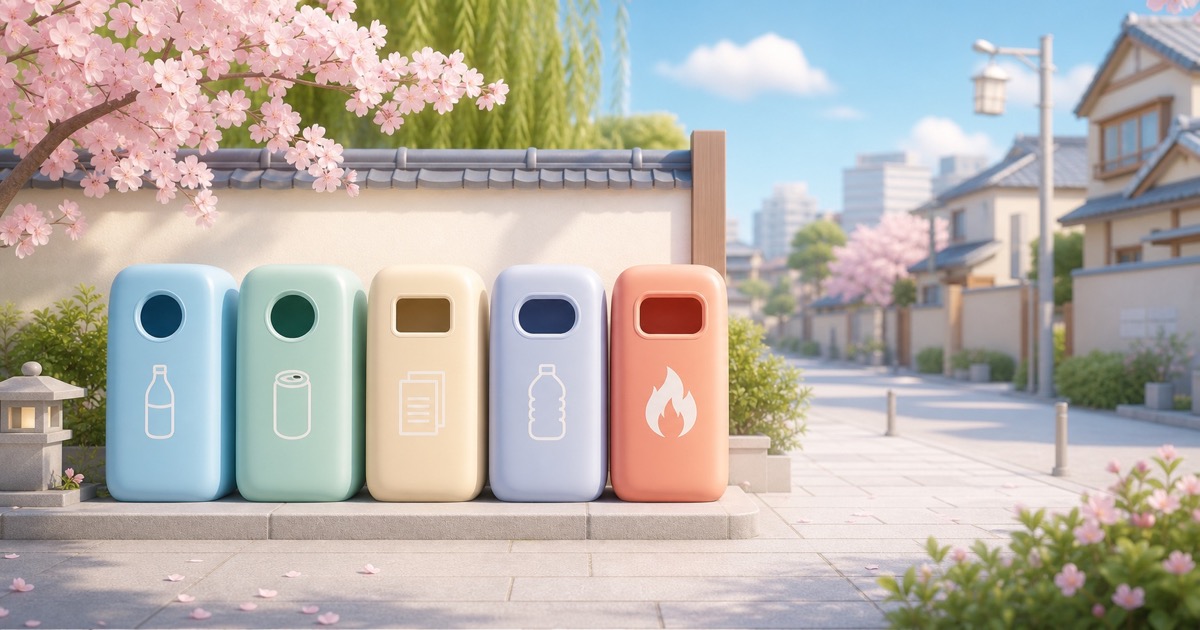
Moving to Japan or visiting for the first time? One of the first surprises for newcomers is that throwing garbage away in Japan requires real effort. Japan has one of the world's most detailed waste sorting systems — and every city, every ward, and sometimes every neighborhood has its own specific rules.
Don't worry. This guide covers everything you need to know about how to sort garbage in Japan, from the basic categories to collection day schedules.
Why Japan Has Such Strict Garbage Sorting Rules
Japan is one of the most densely populated countries on Earth, with limited land for landfills. As a result, the country has developed a sophisticated waste management system built around two pillars:
- Incineration — About 75% of Japan's waste is burned in state-of-the-art incinerators that generate electricity. These facilities require clean, pre-sorted fuel to run efficiently.
- Recycling — Glass, PET bottles, cans, cardboard, and paper are separated at the source (your home) and collected separately so they can be genuinely recycled.
Mixing a lithium battery into burnable trash can damage incinerator equipment and cause fires. Putting a PET bottle in the wrong bag means it gets burned instead of recycled. This is why Japanese municipalities take sorting so seriously — and why your neighbors will notice if you don't.
「もったいない」(Mottainai) — The Japanese concept of "what a waste" expresses deep regret at discarding something without using its full potential. It's the cultural backbone of Japan's recycling ethic.
Japan's 5 Main Garbage Categories
Every item you throw away in Japan falls into one of these five categories:
1. Burnable Garbage (可燃ごみ / Moeru Gomi)
The most common category. Collected 2–3 times per week in most areas.
What goes here:
- Food scraps and kitchen waste
- Dirty paper (tissues, receipts, pizza boxes)
- Rubber, leather items (shoes, belts)
- Small wood items
- Clothing and textiles (if not recyclable)
- Styrofoam and some plastics (varies by city)
Key rule: Drain all liquids from food waste. Many areas require you to use designated semi-transparent bags.
2. Non-Burnable Garbage (不燃ごみ / Moenai Gomi)
Collected once or twice per month.
What goes here:
- Small metal items (pots, cutlery, hangers)
- Ceramics, glass, porcelain
- Small electronics under 30cm
- Lighters (empty them first)
- Umbrellas
- Mirrors
3. Recyclable Waste (資源ごみ / Shigen Gomi)
Usually collected once a week, but rules vary by category.
Sub-categories:
- PET bottles — Rinse, remove cap and label, crush flat
- Cans (aluminum + steel) — Rinse, crush if possible
- Glass bottles — Rinse, sort by color (clear, brown, other) in some areas
- Cardboard — Break down flat, tie with string
- Paper — Bundle newspapers, magazines, flyers separately
- Milk cartons — Rinse, cut open flat, dry before disposal
4. Oversized Waste (粗大ごみ / Sodai Gomi)
Items over 30cm in any dimension. You must book a collection in advance and pay a fee (¥200–¥2,000+ depending on item).
Examples: furniture, bicycles, futons, air conditioners, TVs, microwaves.
How to book: Call your ward office, use their online system, or use the GomiSense app for guidance.
5. Hazardous Waste (危険物 / Kikenbutsu)
Items that require special disposal:
- Batteries (dry-cell) — Drop-off boxes at convenience stores and electronics shops
- Fluorescent light bulbs — Designated collection points
- Spray cans — Must be fully emptied, then disposed as non-burnable
- Ink cartridges — Return to stores or designated bins
Understanding Your Collection Schedule
This is where most newcomers struggle. In Japan, different types of garbage are collected on different days, and you must put your garbage out in the morning on the correct day (usually before 8:00 AM).
Here's a typical weekly schedule for a Tokyo ward:
| Day | Collection Type |
|---|---|
| Monday | Burnable garbage |
| Tuesday | Recyclables (PET bottles) |
| Wednesday | Burnable garbage |
| Thursday | Recyclables (cans, glass) |
| Friday | Burnable garbage |
| 1st & 3rd Saturday | Non-burnable garbage |
| Last Saturday of month | Paper & cardboard |
But your area will be different. Each ward and city publishes its own calendar. The GomiSense app shows your local collection schedule based on your neighborhood — no more guessing which day is which.
The Rules Nobody Tells You
Use the designated bags
Most Japanese cities require you to use specific semi-transparent garbage bags. Some (like Kyoto) require branded bags purchased at convenience stores. Others (like most Tokyo wards) accept any semi-transparent bag of the right color.
Put garbage out on collection day morning only
Do not leave garbage out the night before. Collection usually happens between 7:00–10:00 AM. Garbage left overnight attracts crows, and you'll get a note from the neighborhood association.
The yellow sticker of shame
If you put garbage in the wrong bag or on the wrong day, collectors will leave a yellow sticker on your bag and leave it uncollected. It happens to almost every newcomer at least once.
Empty and clean containers
Rinse food containers, milk cartons, and PET bottles. Dirty recyclables get rejected.
Address stickers
Some areas require you to write your name or apartment number on your garbage bags so violations can be traced. Check your local rules.
How the GomiSense App Helps
Japan's waste sorting rules are genuinely complex — they differ by city, ward, and sometimes season. The GomiSense app makes this manageable:
- AI Camera Scan — Point your camera at any item and instantly get the correct disposal category for your neighborhood
- Collection Calendar — See exactly which day each garbage type is collected in your area
- Morning Reminders — Get notified before collection day so you never miss a pickup
- Recycling Map — Find the nearest battery drop-off, clothing collection, and electronics recycling points
Available in English, Japanese, Turkish, Korean, Chinese, Vietnamese, Indonesian, and Spanish.
Quick Reference Cheat Sheet
| Item | Category |
|---|---|
| Food scraps | Burnable |
| Styrofoam tray (rinsed) | Burnable or Recyclable (varies) |
| PET bottle (rinsed, no cap) | Recyclable |
| Aluminum can (rinsed) | Recyclable |
| Glass bottle (rinsed) | Recyclable |
| Newspaper/cardboard | Recyclable |
| Ceramic mug (broken) | Non-burnable |
| Small fan | Non-burnable or Oversized |
| Bicycle | Oversized (fee required) |
| AA battery | Hazardous (drop-off box) |
| Spray can (empty) | Non-burnable |
Final Tips for Newcomers
- Ask your landlord or building manager for the local garbage rules when you move in — they often have a printed sheet
- Find your garbage station (ゴミステーション) — usually a shared collection point on the street, often with a net or cage to deter crows
- Download GomiSense for real-time guidance based on your exact address
- Be patient — most newcomers take a few weeks to internalize the system. It gets intuitive quickly.
Japan's waste system is one of the cleanest and most efficient in the world. Once you understand how it works, sorting becomes second nature. Welcome to Japan — and welcome to sorting like a local. 💙
Related Guides
Back to BlogJapan Apartment Move-Out Trash Guide: What to Do With Your Garbage Before You Leave
Moving out of a Japan apartment? This checklist covers everything: how to dispose of furniture, appliances, food waste, and oversized items before you hand back the keys. Avoid deposit penalties and neighborhood complaints.
Read article →Where to Donate or Recycle Electronics in Japan (2026)
Find the correct route for old phones, PCs, TVs, batteries, and small appliances in Japan, including trade-in, reuse, retailer, and ward collection options.
Read article →How to Sort Garbage in Japan: The Complete Step-by-Step Guide for Foreigners
Confused about Japan's garbage sorting rules? This guide covers every category — burnable, non-burnable, recyclables, PET bottles, and large items — with practical tips for foreigners living in Japan.
Read article →